

Ibiza travel guide: nature, towns and beaches
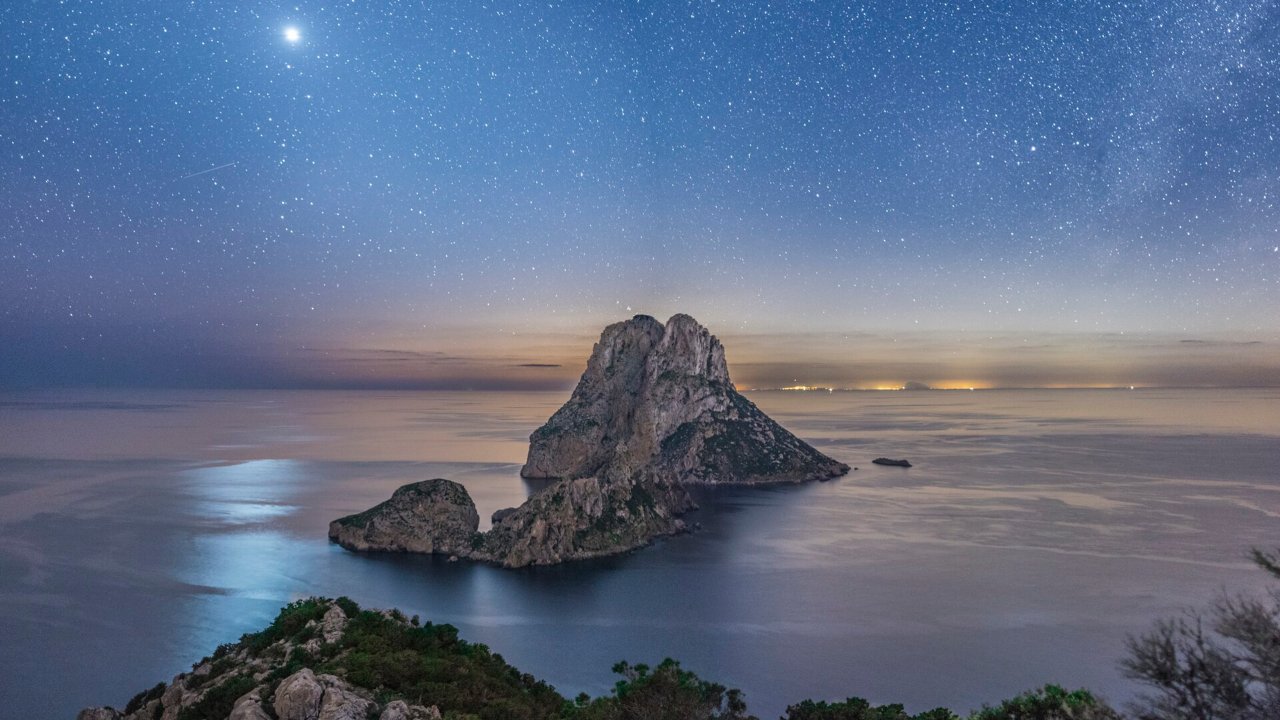
Ibiza is famous for its clubs and sunsets, but the island has much more to offer: a fortified old town that is a UNESCO World Heritage Site, quiet coves in the north, historic salt pans in the south and the rock of Es Vedrà, surrounded by legends. Outside the peak season Ibiza is calm, green and surprisingly rural. This guide covers what you need to know to plan a trip.
Ibiza at a glance
| Area | about 572 km², the third largest of the Balearic Islands |
| Capital | Eivissa (Ibiza Town) |
| Population | about 150,000 |
| Highest point | Sa Talaiassa, 475 m |
| Languages | Catalan (called Eivissenc on the island) and Spanish |
| Airport | Ibiza (IBZ), about 7 km south-west of the town |
| Protection | UNESCO World Heritage Site “Ibiza, Biodiversity and Culture” since 1999, Ses Salines Natural Park, Es Vedrà, Es Vedranell and Western Islets Nature Reserve |
Map: location and regions
Ibiza lies about 80 kilometres south-west of Mallorca, with Formentera just to the south. The island has five municipalities: Eivissa on the east coast, Santa Eulària des Riu in the east, Sant Joan de Labritja in the hilly north, Sant Antoni de Portmany in the west and Sant Josep de sa Talaia in the south-west, which has most of the beaches.
Map: © OpenStreetMap contributors. View larger map
Towns and villages
Ibiza Town and Dalt Vila
The old town, Dalt Vila, rises above the harbour inside 16th century walls. Steep lanes lead up to the cathedral, and from the top you can see as far as Formentera. Together with the Phoenician settlement of Sa Caleta, the Puig des Molins necropolis and the seagrass meadows offshore, Dalt Vila has been a UNESCO World Heritage Site since 1999. Down by the harbour, the La Marina district is full of bars and shops.
Santa Eulària and the north
Santa Eulària des Riu is quieter and more family friendly than the town. Further north Ibiza becomes rural: pine forests, terraces with almond and carob trees and small villages such as Sant Carles and Sant Joan. This is where you find coves such as Cala Xarraca, Benirràs and Portinatx.
Sant Antoni and the west
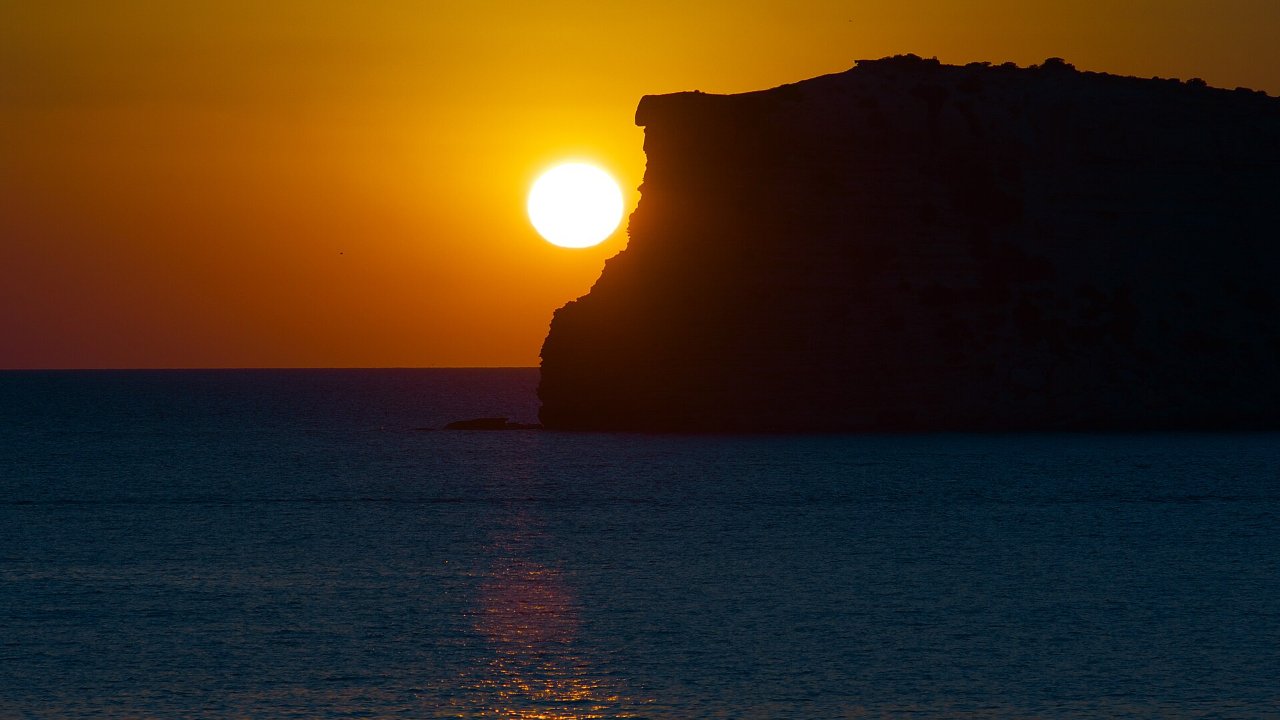
Sant Antoni is the centre of the nightlife and known for its sunsets along the promenade. Offshore lies the island of Sa Conillera. In the south-west, Cala d’Hort opens onto Es Vedrà, a steep rock in the sea that is part of a nature reserve.
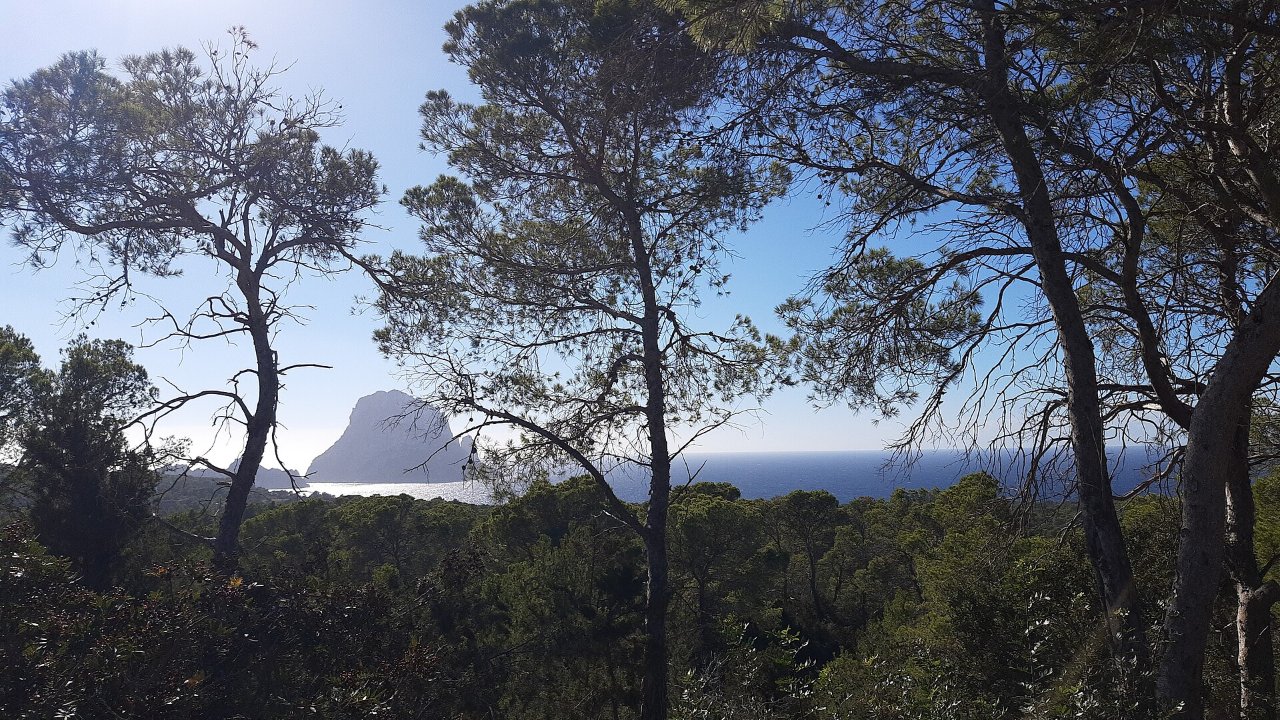
More: Es Vedrà, Es Vedranell and Western Islets Nature Reserve.
Beaches and coves
- Ses Salines and Es Cavallet (south): long sandy beaches inside the natural park, with dunes and juniper behind them.
- Cala Comte (west): shallow, very clear water and a favourite sunset spot.
- Cala Salada (west): small cove among pine trees; in summer, arrive early.
- Benirràs (north): quiet cove where drummers gather at sunset on summer Sundays.
- Cala d’Hort (south-west): beach with a direct view of Es Vedrà.
- Aigües Blanques (north-east): beach below pale cliffs.
Ses Salines Natural Park
In the south of the island, Ses Salines d’Eivissa i Formentera Natural Park protects the old salt pans, dunes, juniper woods and the sea all the way across to Formentera. Salt is still harvested in the pans, and in autumn and spring flamingos and other water birds stop here. The Posidonia seagrass meadows between the two islands are among the best preserved in the Mediterranean.
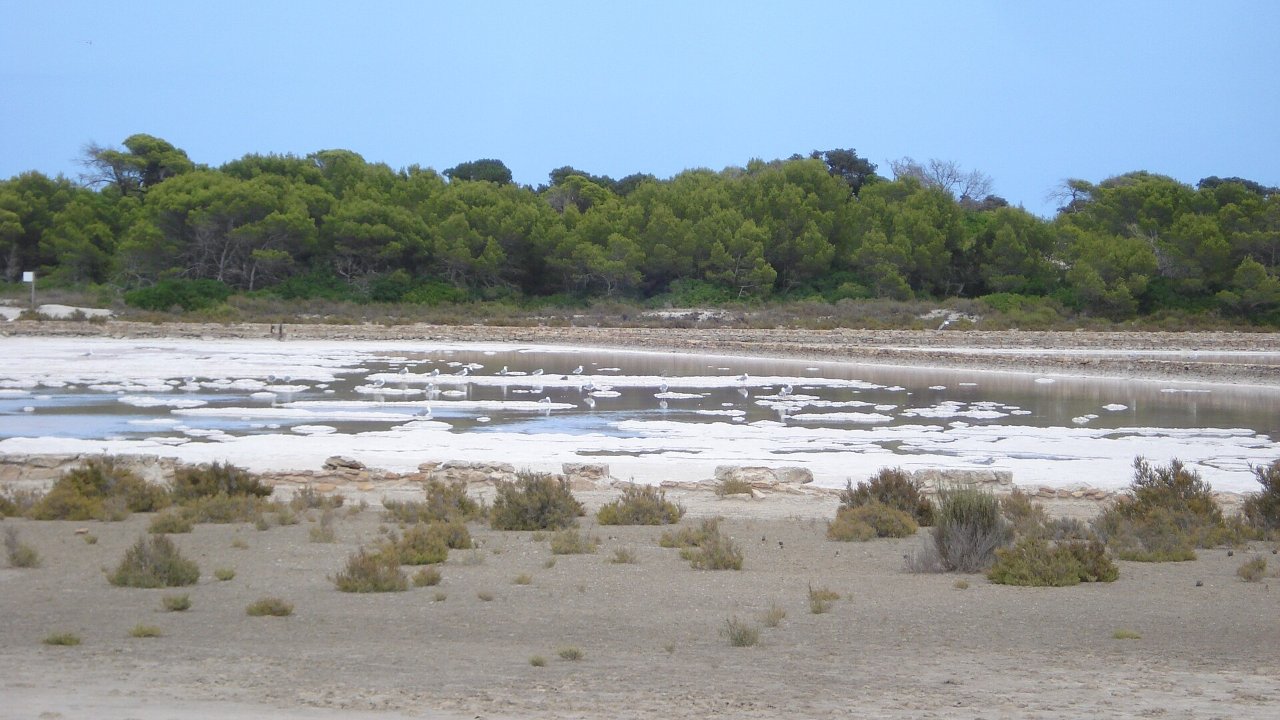
More: Ses Salines Natural Park (Ibiza and Formentera).
Markets and culture
Several well known markets run during the season: the hippy market at Es Canar near Santa Eulària on Wednesdays and the Las Dalias market in Sant Carles on Saturdays. There are also farmers’ markets selling local produce. The villages have whitewashed fortified churches that once offered shelter from pirates.
Weather and best time to visit
Ibiza is the driest and sunniest of the large Balearic Islands. At the airport the average daytime high is just under 16 °C in January and 30 °C in August. The island gets only a little over 400 millimetres of rain a year and around 2,700 hours of sunshine (AEMET, 1981 to 2010 averages). The big clubs usually open from May to October. If you are after peace and nature, come in spring or autumn while it is still warm.
Getting there and getting around
In season there are direct flights to Ibiza from many UK airports. Ferries link the island with Barcelona, Valencia, Dénia and Palma, and boats leave Ibiza Town harbour for Formentera several times a day. Buses run between the towns and to many beaches; for the north and remote coves, a hire car is handy.
Frequently asked questions about Ibiza
Where is Ibiza?
In the western Mediterranean, about 80 kilometres south-west of Mallorca and some 90 kilometres off the Spanish east coast near Dénia. Together with Formentera, Ibiza forms the Pityusic Islands.
What is there to do in Ibiza apart from clubbing?
Explore Dalt Vila, discover the coves in the north, walk along the coast, visit Ses Salines Natural Park, browse the markets and take a day trip to Formentera.
When is the best time to visit Ibiza?
June to September for a beach holiday, May, June, September and October for a quieter break with walking.
How do you get from Ibiza to Formentera?
By boat from Ibiza Town harbour to La Savina; the crossing takes about 30 minutes to an hour depending on the boat.
More news about the island is in the Ibiza and Formentera section, and an overview of all islands is on the home page.
Cover photo: Es Vedrà off the south-west coast of Ibiza. Photo: David Holderbach, Wikimedia Commons, Public domain