

Cabrera: island guide to the archipelago off Mallorca
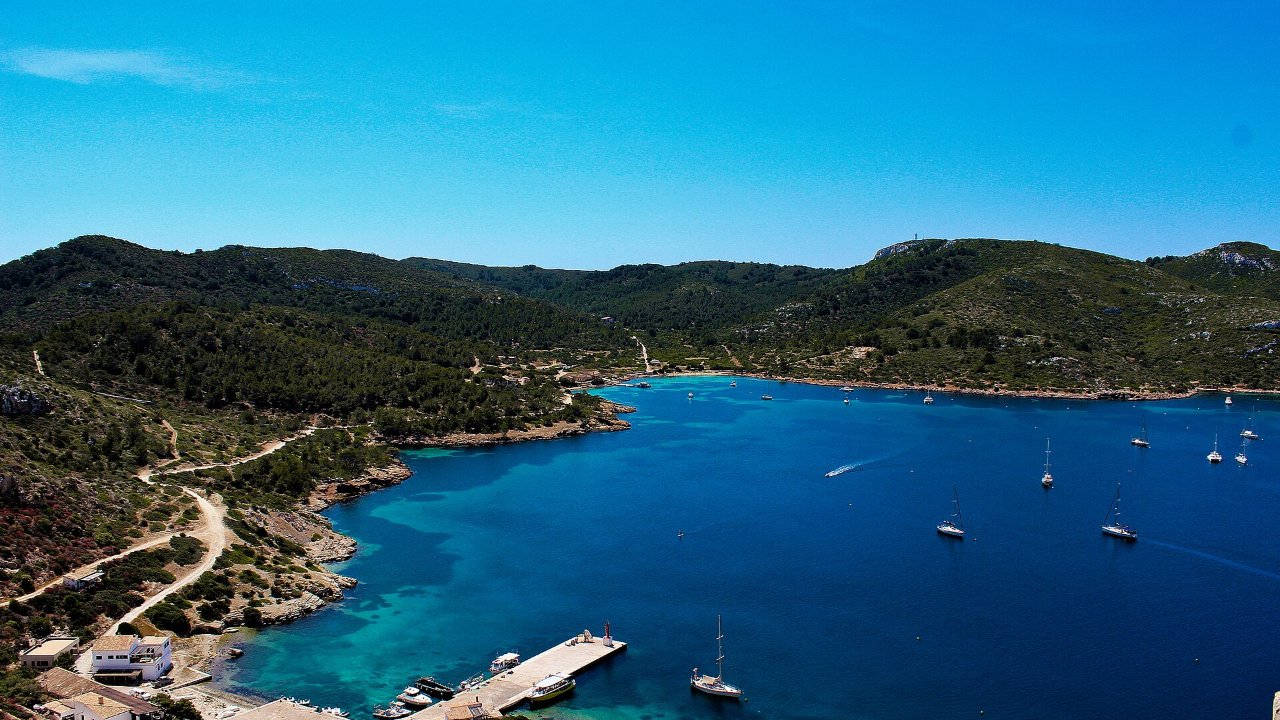
Cabrera is the smallest and most unspoilt part of the Balearic Islands. About ten kilometres off the southern tip of Mallorca lies a group made up of one main island, Cabrera Gran, and many small islets and rocks. There are no hotels, roads or holiday homes, and no permanent residents either. Most people visit Cabrera on a boat trip from Colònia de Sant Jordi: up to the castle above the harbour, into the Blue Cave and to small beaches with very clear water. The whole archipelago is a land and marine national park.
Cabrera at a glance
| Location | about 10 km south of Cap de ses Salines (Mallorca), roughly 18 km by boat from Colònia de Sant Jordi |
| Islands | the main island Cabrera Gran with the only harbour, plus Illa des Conills and many smaller islets and rocks |
| Area | land area of the whole archipelago about 13 km² (1,318 hectares); including the sea, the national park covers more than 90,000 hectares |
| Highest point | Na Picamosques on Cabrera Gran, 172 m |
| Municipality | part of the municipality of Palma |
| Residents | no permanent residents; only park staff and military personnel live there |
| Getting there | excursion boats from Colònia de Sant Jordi, mainly from spring to autumn |
| Protection | Cabrera National Park since 1991, greatly enlarged in 2019 |
Map: where the archipelago is
Cabrera Gran has a heavily indented coastline with a deep bay in the north-west, where the harbour lies. To the north are small islets such as Na Foradada, Na Pobra and Na Plana, and to the west Illa des Conills, the second largest island of the archipelago. Excursion boats arrive from the north, from the port of Colònia de Sant Jordi in the municipality of Ses Salines.
Map: © OpenStreetMap contributors. View larger map
What to see on Cabrera
The harbour and the castle
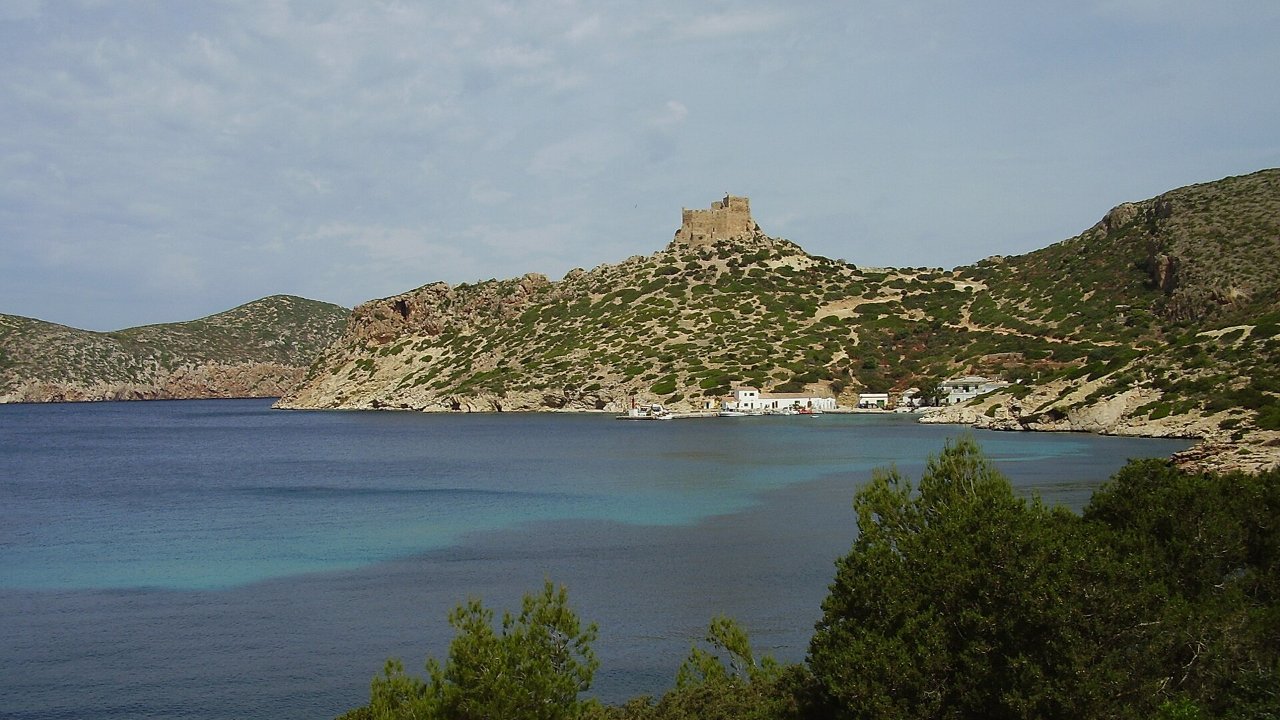
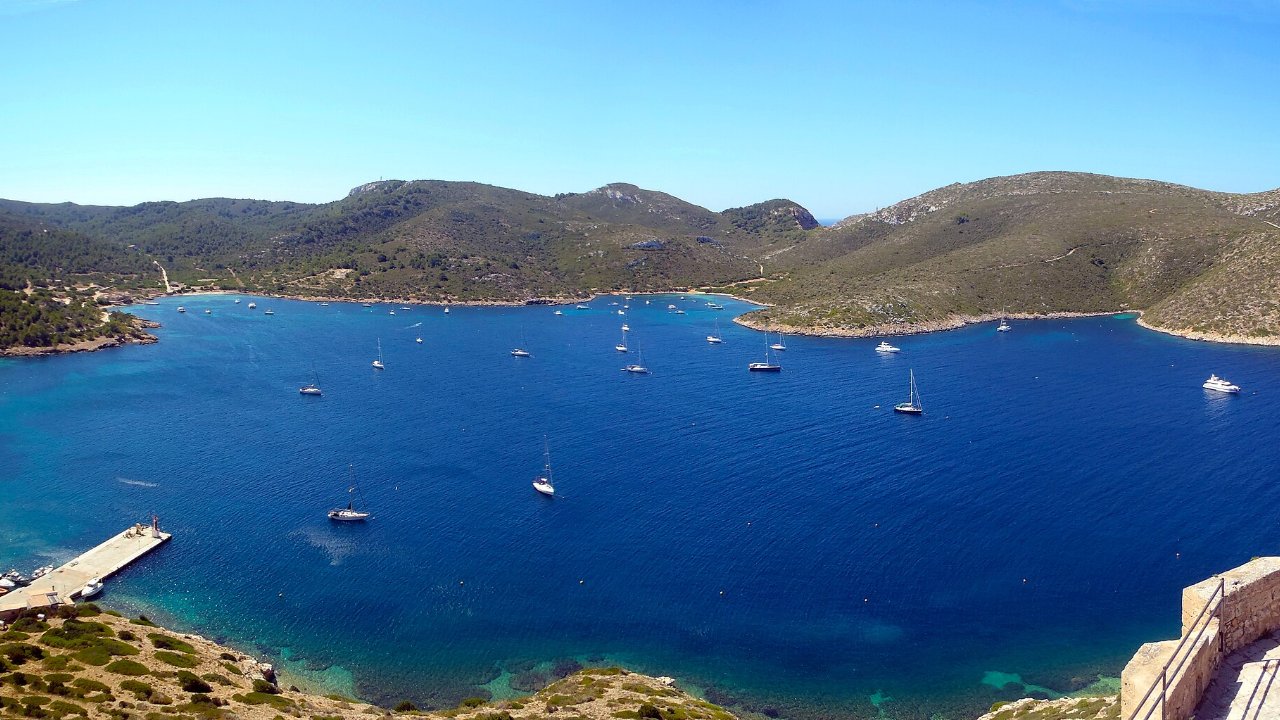
All boats moor in the sheltered harbour bay of Cabrera Gran. Around the jetty stand a few white buildings: the national park information office, the refuge, a small canteen and houses for park staff. Above the harbour entrance stands the Castell de Cabrera, a 14th century castle built as protection against pirates. A good path climbs up in 20 to 30 minutes. From the top you look over the bay, the neighbouring islets and, on clear days, the coast of Mallorca.
Es Celler museum
A former wine cellar from the late 19th century now houses a small museum. It tells the story of the island from antiquity through its time as a wine estate and military zone to the national park. Exhibits include finds from shipwrecks lying on the seabed around Cabrera. The way there is short and flat and runs along the shore of the bay.
Monument to the French prisoners
In 1809, after the Battle of Bailén in the Peninsular War, thousands of French soldiers were left on Cabrera. With no shelter and far too little water and food, they had to stay on the island until 1814, and far more than half of them did not survive. An obelisk near the harbour commemorates the dead.
Cova Blava
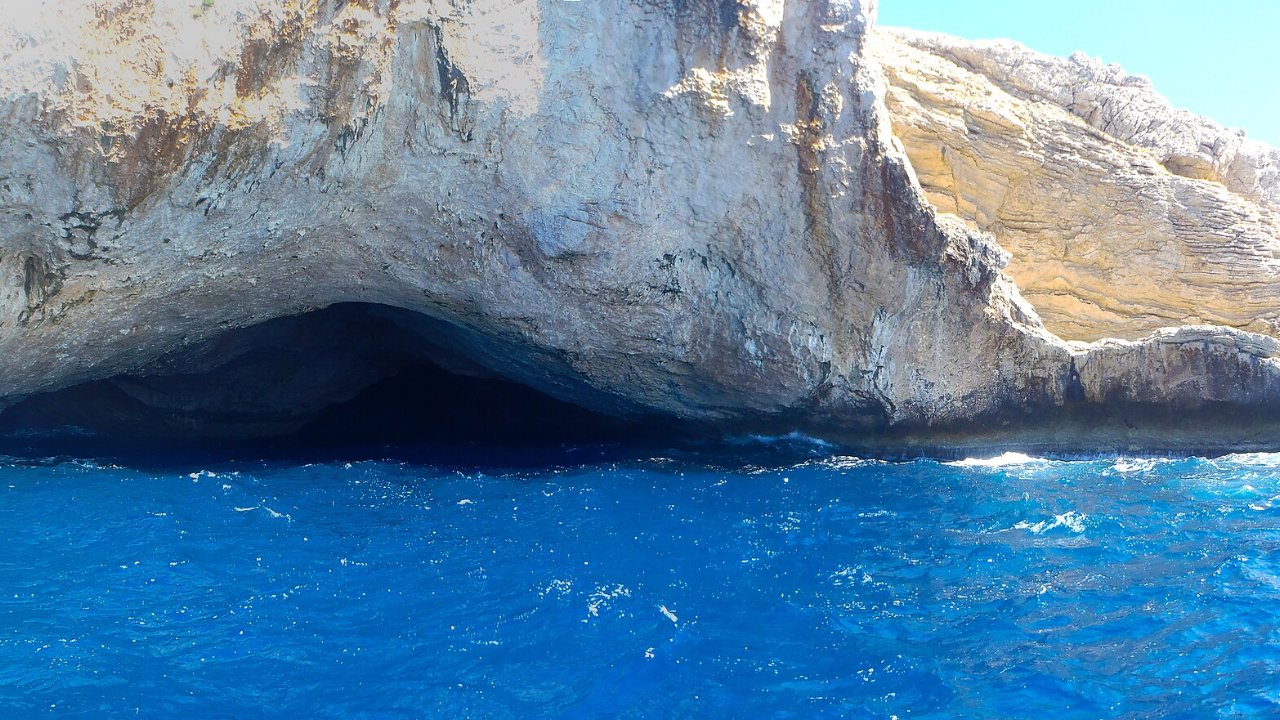
The Blue Cave lies in the cliffs near the harbour entrance and can only be reached from the water. The entrance is high enough for smaller boats to sail in. Sunlight reflected off the pale seabed makes the water inside glow an intense blue. Whether a swimming stop is possible is up to the crew, depending on the sea.
Beaches in the harbour bay
There are two small beaches in the bay with shallow, very clear water, just a few minutes’ walk from the jetty. With a mask you will see shoals of fish over the seagrass meadows right by the shore.
Walking trails
Around the harbour there are waymarked paths that you can walk on your own, for example to the castle, the museum and the beaches. Longer routes into the interior of the island are only open with a guide from the park staff. The path to N’Ensiola lighthouse at the south-west tip is being restored and is due to reopen as a self-guided route in 2027. The paths are stony with little shade, so sturdy shoes, sun protection and plenty of water are a must.
Nature: Cabrera National Park
Because Cabrera was a military zone for decades, the archipelago remained almost untouched. Since 1991 it has been protected as a national park that also includes a large marine area. Underwater there are large groupers, sea bream and barracudas above wide seagrass meadows; on land rare seabirds such as Balearic shearwaters and Eleonora’s falcons breed, and almost every islet has its own subspecies of the Balearic lizard. Visitors must follow strict rules: stay on the paths, take nothing away and do not feed the animals.
More: Cabrera Archipelago Maritime-Terrestrial National Park.
A typical day trip
In the morning the boat leaves Colònia de Sant Jordi. On the way it passes the small islets in the north of the archipelago, such as Na Foradada with its rock arch. In calm seas the captain heads for the Cova Blava, then into the harbour bay. You get three to five hours on the island depending on the operator. A good plan is to walk up to the castle first while it is still cool, then follow the flat path to the Es Celler museum and the monument, and finish with a break on one of the beaches. In the afternoon the boat returns to Mallorca.
Staying overnight on Cabrera
There are no hotels. The only accommodation on land is the small national park refuge by the harbour; it is currently closed and, according to the park authority’s plans, should reopen in spring 2027. Until then you can only stay overnight on board a boat at a booked mooring buoy. Camping is not allowed. Most visitors therefore stay in Colònia de Sant Jordi or elsewhere on Mallorca’s south coast.
Weather and best time to visit
Late spring and early autumn are the most pleasant times for a trip. In May and June the island is in bloom and it is not yet too hot for walking; in September and October the sea is warm and it is less crowded than in high summer. In July and August the shadeless paths get very hot, but the water is perfect for swimming. In winter hardly any boats run, and trips are cancelled in strong wind and rough seas.
Getting there
Without your own boat, take one of the excursion boats from the harbour of Colònia de Sant Jordi in the south of Mallorca. The crossing takes about 30 minutes by speedboat or around an hour on a traditional excursion boat. Operators run from spring to autumn, several times a day in high season. As visitor numbers per day are limited, book a few days ahead in July and August. Before or after the trip, the national park visitor centre in Colònia de Sant Jordi is worth a visit.
If you come on your own boat or a charter yacht, you need a permit from the park authority, plus a booked mooring buoy for the night. Free anchoring is banned throughout the park.
Frequently asked questions about Cabrera
Where is Cabrera?
South of Mallorca, about ten kilometres off Cap de ses Salines. Administratively the archipelago belongs to the municipality of Palma.
Is Cabrera an island or a group of islands?
The name is used for both. Cabrera Gran is the main island with the harbour, and the Cabrera archipelago also includes Illa des Conills and many smaller islets and rocks. The whole archipelago, including its marine area, is a national park.
How do you get to Cabrera?
By excursion boat from Colònia de Sant Jordi; the crossing takes 30 to 60 minutes. With your own boat only with a national park permit.
Is a day trip to Cabrera worth it?
Yes. A day is enough for the castle, the museum, the Cova Blava and a swim in the bay. For longer walks, book a guided tour.
Can you stay overnight on Cabrera?
At the moment only on board a boat at a booked mooring buoy. The national park refuge is due to reopen in spring 2027.
More news about Cabrera is in the Cabrera section, and an overview of all islands is on the home page. Other islands: Mallorca, Menorca, Ibiza and Formentera.
Cover photo: coast of the Cabrera archipelago. Photo: CaCo789, Wikimedia Commons, CC BY-SA 4.0